
If you’re in crisis right now — call or text 988 (US Suicide & Crisis Lifeline), available 24/7. This article isn’t a substitute for emergency mental-health support. If you’re lonely after losing a pet and you want to talk to a real person about it today, our free phone line is open: 877-638-1122.
I’m Jewel. I’m one of the people who picks up the phone when you call the free loneliness line at How To Beat Loneliness. I want to write about a call I take more often than most people would guess — someone whose dog or cat has died, who feels foolish for how hard it has hit them.
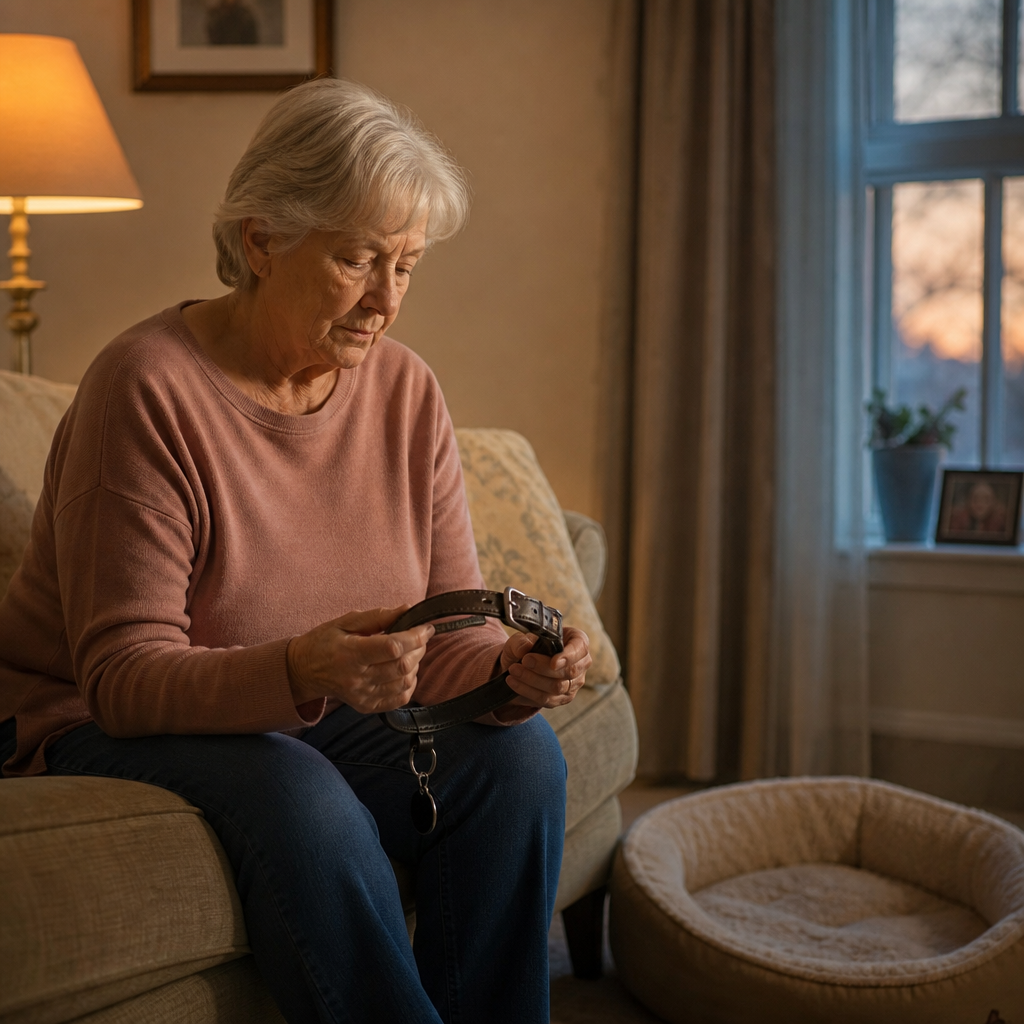
They almost always apologize. I know it’s just a pet. Then their voice goes, and we both sit with it for a second. If that’s where you are today, you can skip the rest of this and just call: 877-638-1122.
Yes, it is normal to feel lonely after losing a pet
It is normal, it is common, and it is not an overreaction. In a study of 975 UK adults published in PLOS ONE in January 2026, 7.5% of people who had lost a pet met the clinical criteria for prolonged grief disorder — almost exactly the same rate as people grieving a close friend, at 7.8%. Among people who had lost both a pet and a human being, 21% said the pet’s death was the more distressing of the two.
So when you feel wrecked and slightly embarrassed about it, the research is on your side and your instincts about yourself are not. You are grieving something that the numbers say is genuinely comparable to other losses people are allowed to mourn openly.
Why the house gets so much quieter than you expected
Here is the part people underestimate. A pet is not only company — it is the thing that structures a day and pushes you out of the front door.
The University of Michigan’s National Poll on Healthy Aging, published in February 2026, asked 2,698 US adults aged 50 to 95 about this. Among pet owners aged 50 to 80, 83% said their pet gives them a sense of purpose, 70% said it connects them with other people, and 63% said it reduces their stress.
Read that middle number again — seven in ten said the animal connected them to other humans. The dog was the reason you spoke to the neighbour every morning. The vet’s receptionist knew your name.
So when the pet dies you don’t lose one relationship. You lose the small daily scaffolding that was quietly holding up several of them, which is why being lonely after losing a pet can feel wildly out of proportion to “one animal.”
Why nobody around you is talking about it
Researchers have a name for this: disenfranchised grief. It means a real loss that your community doesn’t formally recognise — no funeral, no bereavement leave, no casserole on the doorstep.
A 2014 study in Omega analysing open-ended responses from bereaved pet owners found that a lack of validation and support was one of the dominant themes people described. They weren’t only grieving. They were grieving while managing everyone else’s discomfort about it.
That silence is usually what makes people dial our number. Not the sadness itself — the having nowhere to put it.

What actually helps in the first few weeks
Say the name out loud to somebody. Not “my dog” — the name. People who ring us often haven’t said it aloud since it happened, and there’s a reason it catches in the throat the first time.
Keep one piece of the old routine. If you walked at seven, walk at seven. The hour you used to fill is the hour that will hurt, and an empty schedule is not a kindness to yourself.
Don’t rush the bowls and the bed into the bin. There’s no deadline, whatever a well-meaning relative says. Move them when you’re ready, not when someone else is uncomfortable looking at them.
Be careful about deciding “never again” in week one. That’s grief talking, and it’s a decision that doesn’t need making yet. If you’re weighing it up later, we wrote separately about whether pets help with loneliness.
Watch the drift. If you notice you’ve stopped leaving the house at all — remember the dog was the reason you left it — that’s the point to tell someone, whether it’s us, a friend, or your doctor.
Who you can actually call
There are real free options, and they’re good at different things. Here is the honest version, including what we’re not.
| Option | Cost | When it fits | Where it falls short |
|---|---|---|---|
| How To Beat Loneliness 877-638-1122 | Free | You want to talk to a real person about the loss today, with no time limit and no form to fill in | We’re companions, not clinicians — we can’t diagnose, prescribe, or provide therapy |
| Cornell University Pet Loss Support Hotline 607-218-7457 | Free | You want someone whose whole focus is pet loss specifically | Hours vary seasonally and it’s run by trained volunteer veterinary students, so it isn’t 24/7 |
| 988 Suicide & Crisis Lifeline | Free | The loss has you thinking about hurting yourself, or you’re in crisis | Not designed for “the house is too quiet this afternoon” |
| A grief counsellor or therapist | Varies; insurance may cover it | The grief isn’t easing after months, or it’s affecting your sleep, eating, or work | Cost, waiting lists, and nobody is available at eleven at night |
If the loneliness has been building for longer than this one loss, our wider guide to finding someone to talk to when lonely covers the other free routes, and we have a companion piece on talking to someone about grief more generally.
Questions people ask us about this
Is it normal to be this lonely after a pet dies?
Yes. In a 2026 PLOS ONE study of 975 adults, 7.5% of people who lost a pet met the criteria for prolonged grief disorder, against 7.8% for those who lost a close friend — and 21% of people who had experienced both a pet and a human death said the pet’s was harder.
Can I call a loneliness line just because my pet died?
You can. How To Beat Loneliness answers a free line at 877-638-1122, and a real human picks up — no script, no fee, no AI, and no requirement that your reason be serious enough.
How long does grief after losing a pet last?
There’s no fixed timeline, and the research is clear that for a minority it lasts long enough to be clinically significant. If it isn’t easing after several months, or it’s affecting your sleep, appetite, or ability to work, that’s worth raising with your doctor rather than waiting it out.
Should I get another pet straight away?
There’s no single right answer, and it’s worth not deciding in the first raw weeks. Some people find a new animal restores the routine and the daily contact with other people; others need a long gap first, and both are ordinary.
Important
We are companions, not clinicians. The phone line at How To Beat Loneliness is staffed by real humans who listen — we don’t diagnose, prescribe, or treat. If you’re working through grief, depression, or a mental-health condition, please pair our conversation with a licensed therapist, your doctor, or one of the resources above.
If you’re in immediate danger or thinking about hurting yourself, call or text 988 (US Suicide & Crisis Lifeline).
One last thing, from the person who answers the phone. Nobody has ever called this line about a pet and been told it wasn’t a good enough reason, and you wouldn’t be the first.
— Jewel, How To Beat Loneliness
Sources
- Hyland, P. — “No pets allowed: Evidence that prolonged grief disorder can occur following the death of a pet,” PLOS ONE, 2026
- University of Michigan National Poll on Healthy Aging — Pets and older adults, 2026
- Packman, W. et al. — “Online survey as empathic bridging for the disenfranchised grief of pet loss,” Omega, 2014
- Cornell University College of Veterinary Medicine — Pet Loss Support Hotline