
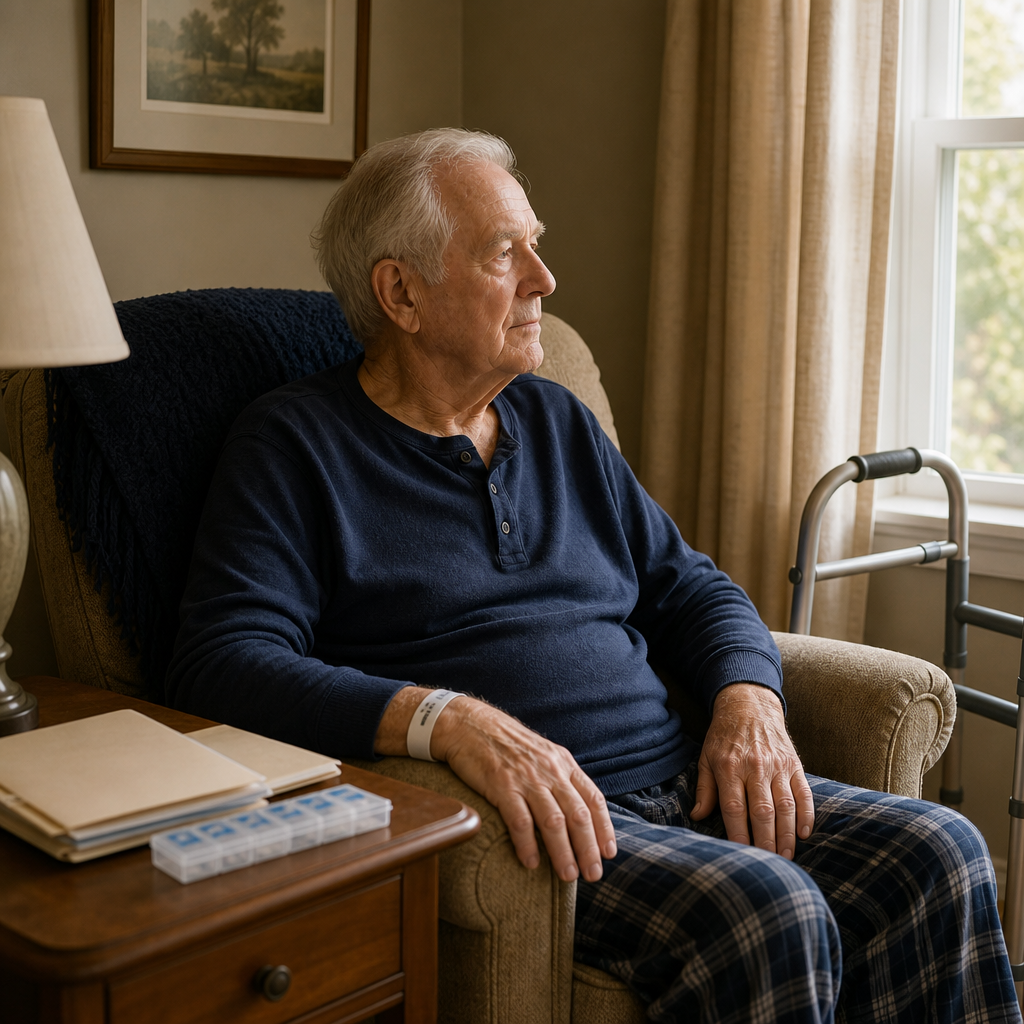
Short answer: If you are lonely after a hospital stay, How To Beat Loneliness runs a free phone line you can call right now at 877-638-1122 — no insurance, no appointment, no diagnosis needed, just a real person who will talk with you for as long as you want. The silence that hits when you walk back through your own front door is a documented pattern, not a personal failing.
For a week or two you were surrounded by people. Nurses every few hours. A roommate coughing on the other side of the curtain. Someone checking your blood pressure at 3 a.m. whether you liked it or not. Then a discharge folder, a ride home, a door closing — and nothing. If you are lonely after a hospital stay, that whiplash is one of the most common and least discussed parts of recovery.
Nobody puts it on the discharge instructions. There is a page about your medications, a page about your incision, a follow-up appointment circled in pen. There is no page that says the house is going to feel enormous and quiet, and that you may sit in your chair at 4 p.m. wondering who on earth you would even call.
Why you feel so lonely after a hospital stay
There is a name for the fragile stretch right after discharge. In 2013, Yale cardiologist Harlan Krumholz described post-hospital syndrome in the New England Journal of Medicine: a transient, generalized period of vulnerability after a hospital stay that is not necessarily tied to whatever put you in the bed. Disrupted sleep, poor nutrition, pain, deconditioning from lying still, medication changes — and, listed right alongside them, social isolation.
In other words, the loneliness is not a side story to your recovery. Medicine considers it part of the condition. Three things stack on top of each other in that first week home:
- Your body pulled you out of circulation. You cannot drive yet. Stairs are a negotiation. The coffee group, the church pew, the grocery store — all of it is temporarily out of reach.
- The visitors taper off fast. Attention peaks the day you come home and drops within about 72 hours. Everyone means it when they say call me if you need anything. Almost nobody expects you to actually call.
- You are tired of being the patient. After days of describing your symptoms to strangers, most people do not want another health conversation. They want an ordinary one — about the weather, a ballgame, a grandchild. And that is exactly the conversation nobody is offering.
This is not just a mood — it affects how you heal
The National Institute on Aging is blunt about it: adults who are lonely or socially isolated tend to be less healthy, have longer hospital stays, and are readmitted to the hospital more often than people with steady social connection. If you are recovering alone, the phone call you keep not making is closer to a medical task than a social nicety.
The longer-range numbers, compiled by the CDC, are worth seeing plainly:
None of that is meant to frighten anyone who just got home from a procedure. Two weeks of quiet will not give you dementia. The point is the opposite: connection is not the soft optional part of recovery. It belongs on the same list as taking your pills and doing your walking.
Who you can actually call this week
Most people stall here, because the honest problem is not that no help exists — it is not knowing which door to knock on for which need. Here is the short version:
| What you need | Where to call | Cost |
|---|---|---|
| Just someone to talk to, today | How To Beat Loneliness — 877-638-1122 | Free |
| Meals, rides, in-home help, local services | Eldercare Locator — 800-677-1116 | Free referral |
| Questions about your recovery or meds | Your discharging hospital nurse line | Free |
| You are in crisis or thinking of harming yourself | 988 Suicide & Crisis Lifeline — call or text 988 | Free, 24/7 |
The Eldercare Locator is a public service of the federal Administration for Community Living, and it is the fastest way to reach your local Area Agency on Aging for meal delivery, transportation to that follow-up appointment, or short-term in-home support. Our line is the other half: it is for the part of the day when the practical problems are handled and the house is still too quiet.
A realistic plan for your first week home
Recovery advice usually assumes energy you do not have yet. This does not.
- Pick one anchor time each day. Loneliness is worst in unstructured hours — usually late afternoon. Decide now that 4 p.m. is when you make a call, any call. A structure beats motivation when you are exhausted.
- Give people a specific job. Call me if you need anything gets no takers. Could you bring milk Thursday gets a yes. People want a task, not an open-ended offer.
- Say the sentence out loud once a day. After days of silence, speech gets stiff and the next call gets harder. Read the newspaper aloud, talk to the dog, or call our line and talk to a person. It keeps the machinery working.
- Do not wait to feel like it. Post-discharge fatigue removes the desire to reach out long before it removes the ability. Reaching out first is what brings the desire back, not the other way around.
- Tell your follow-up doctor. Say plainly that you have been alone and it has been hard. It is relevant clinical information, and there is more support available than most people are offered — see our guide on how to talk to your doctor about loneliness.
If your recovery is turning into an ongoing condition rather than a short episode, the isolation works differently and lasts longer — we covered that separately in chronic illness and loneliness. And if you want the wider view of what actually helps over months rather than days, start with our main guide on how to beat loneliness.
What happens if you call our line
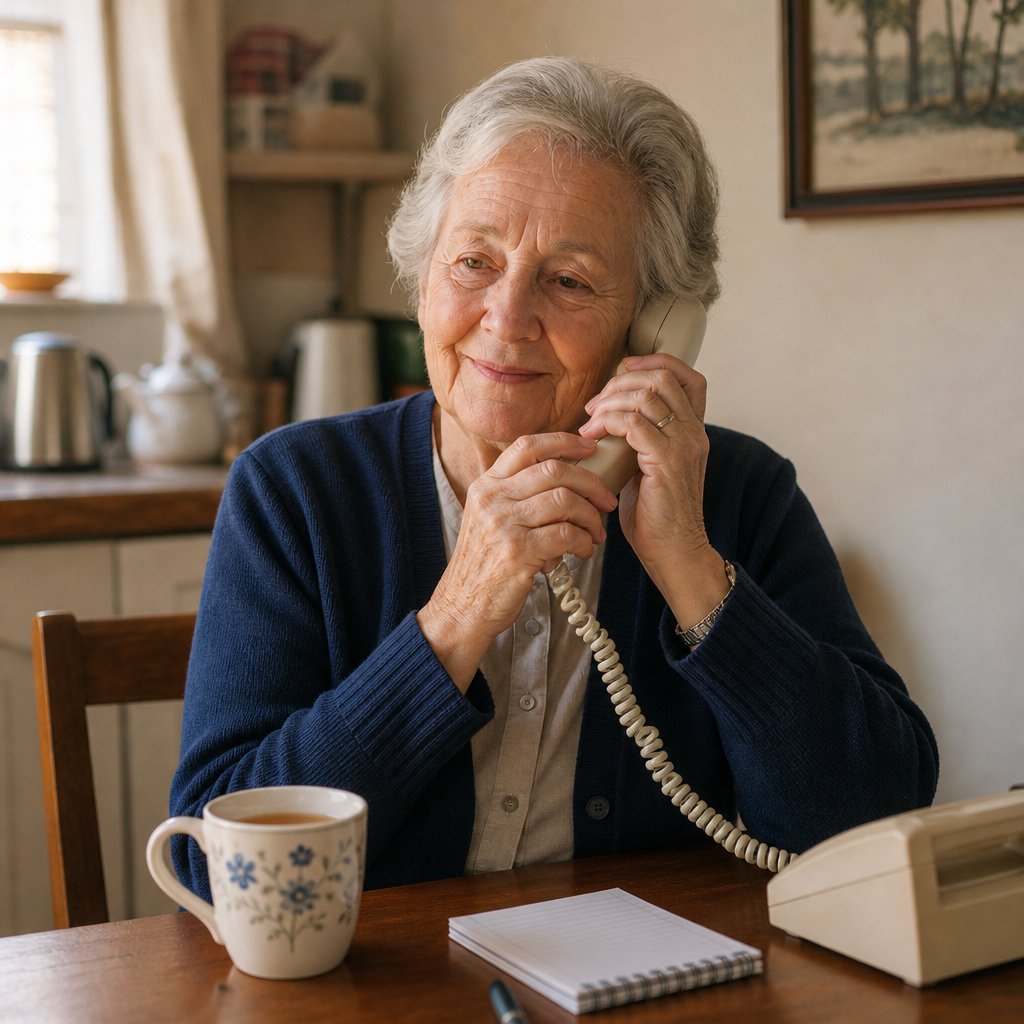
Nothing complicated. You dial 877-638-1122. A person picks up. You do not have to explain your surgery, justify why you called, or prove you are lonely enough to deserve it. You can talk about the hospital food if you want. You can talk about your late wife. You can say you just wanted to hear a voice, which is the most common reason people call.
It is free, it does not bill your insurance, and nothing goes in your medical record. If you would rather read exactly how a call goes before dialing, we wrote it all out on our free loneliness phone line page.
One note on safety: if the loneliness after your hospital stay has turned into hopelessness, or you are having thoughts of hurting yourself, please call or text 988 — the Suicide & Crisis Lifeline, free and staffed around the clock. That is not an overreaction. Depression after a hospitalization is common and treatable.
Frequently asked questions
Is it normal to feel lonely after a hospital stay?
Yes. You go from constant human contact and monitoring to an empty house in a single afternoon, while you are still tired, sore and unable to get out. Social isolation is one of the recognized components of post-hospital syndrome, the period of general vulnerability that follows discharge.
How long does the loneliness after discharge usually last?
For most people it eases as mobility returns and normal routines resume, often within a few weeks. If it is still heavy after a month, or it comes with poor sleep, no appetite or a loss of interest in everything, that is worth raising with your doctor at your follow-up.
Who can I call if I just want someone to talk to?
How To Beat Loneliness answers at 877-638-1122. It is free, there is no appointment, and you do not need a crisis or a diagnosis to call. For practical help such as meals and rides, the federal Eldercare Locator at 800-677-1116 will connect you to services in your own county.
Does being lonely actually slow down recovery?
The National Institute on Aging reports that lonely and socially isolated adults tend to have longer hospital stays and are readmitted more often than well-connected adults. Connection is treated as part of recovery, not a bonus on top of it.
What if I have nobody to call at all?
That is precisely who our line exists for. Many callers say they have not spoken to anyone in days. You do not need a friend on the other end already — you just need a number, and this one is free: 877-638-1122.
Written by Landon for How To Beat Loneliness. If your house has been too quiet since you got home, call us at 877-638-1122 — it is free, and someone will pick up.