Short version: If you’re a man who feels isolated, there are real, mostly free clubs for lonely men — Men’s Sheds, bowling leagues, veteran posts, service clubs, and local Meetup groups — that build steady, in-person friendships without any pressure to “open up” first. If you’d rather just talk to a person today: call 877-638-1122 — free, no script, no upsell.
I’m Sergio. I run How To Beat Loneliness — a free phone line for people who just need to talk. A couple of studies crossed my desk this year and made me want to put together an honest list of clubs for lonely men that actually work — not advice to “open up more,” but real, mostly free groups where you show up on a schedule and the friendship happens on its own. If you want to skip the article and just talk: 877-638-1122.
Why clubs for lonely men work better than talking about it
Most advice about loneliness assumes the fix is emotional — a deeper conversation, a support group, learning to “open up.” That helps some people. But Pew Research’s January 2025 study found men and women are about equally likely to have at least one close friend — the gap shows up in what that friendship can carry. Only 38% of men said they’d be extremely or very likely to turn to a friend for emotional support, versus 54% of women. Men with close friends also contact them less often.
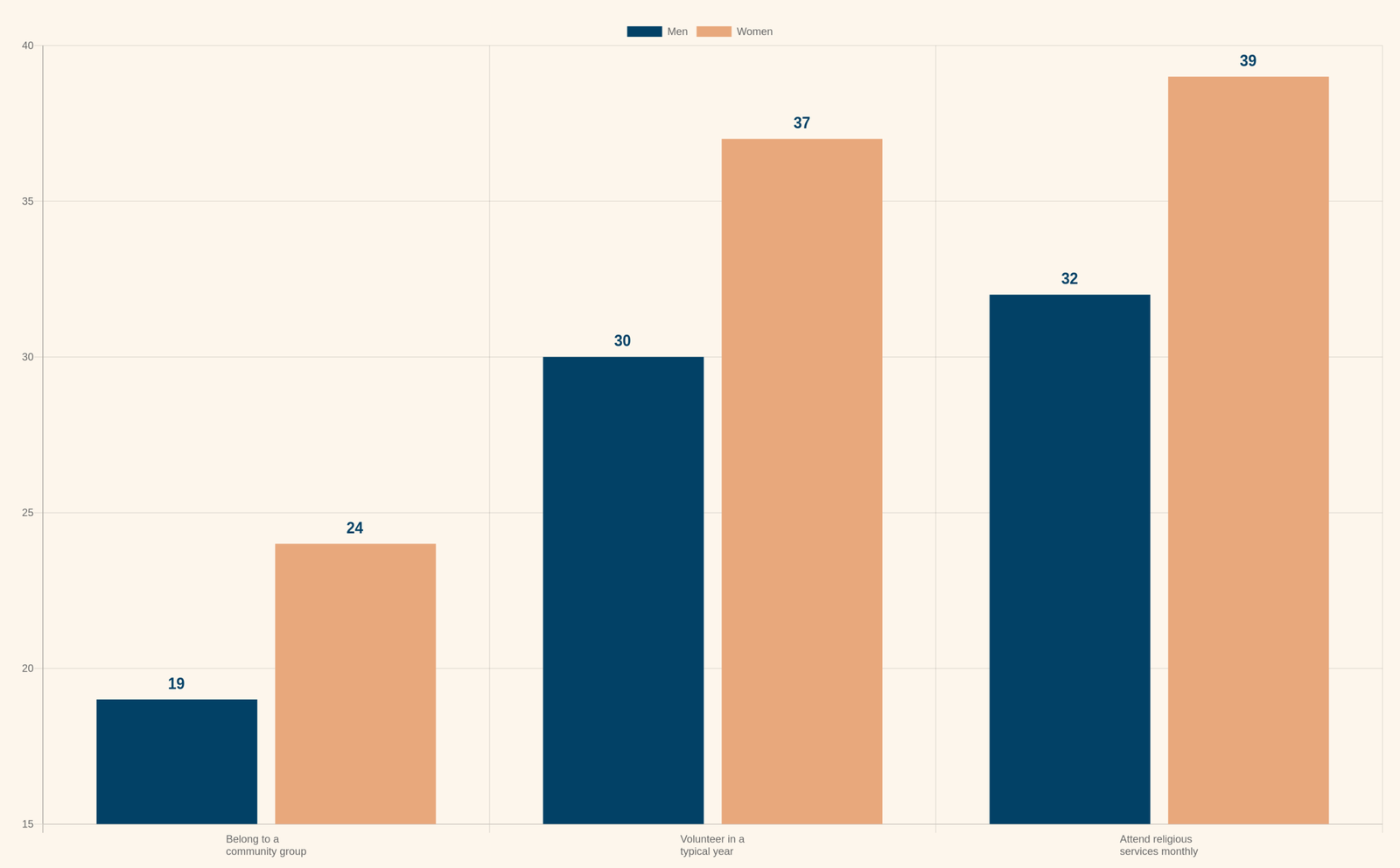
AARP’s December 2025 loneliness survey, cited in its Gen X men friendship study, found the same pattern in the groups that build those friendships in the first place: only 19% of men belong to a local community organization, club, or group, versus 24% of women; 30% of men volunteer at least once a year, versus 37% of women; and 32% of men attend religious services monthly, versus 39% of women. Ninety-five percent of men say friends are essential to a happy, healthy life — they’re just less likely to be in the rooms where friendships actually form. The same reporting found Gen X men now feel lonelier than Baby Boomer men do.
That’s not a character flaw. It’s a structural gap — and structural gaps get fixed by showing up somewhere on a schedule, not by trying harder to feel connected. Here are five places to do that.
5 free or nearly-free groups where men are building friendships
1. Men’s Sheds
Men’s Sheds are free, community workshop groups built around doing something with your hands — woodworking, small repairs, community projects — while you talk. There’s no membership fee to join. A Wyoming chapter that started in October 2025 with 13 members now meets twice a month at the local senior center, and members can visit other chapters around the country and the world. Founding director Mark Winston’s observation is the whole reason this list exists: retirees often expect to stay in touch with old work friends, “but that doesn’t really happen.” A shed gives you a reason to show up anyway.
2. League bowling
Bowling leagues are cheap, weekly, and built for exactly the kind of low-pressure, side-by-side friendship men say they want. Nationally, USBC-certified membership has held close to 1.07 million bowlers for three straight seasons, and the organization credits local centers, leagues, and volunteers with giving the sport “a sense of community across our industry.” Call your nearest bowling center and ask about a beginner or mixed league — most centers run one, and fees are set locally, so ask what a season costs before you commit.
3. The American Legion or VFW
If you’re an honorably discharged veteran, you may now qualify for membership you didn’t before. The LEGION Act cut the number of recognized “war eras” from seven down to two continuous windows — April 1917 to November 1918, and December 1941 onward, until Congress says the U.S. is no longer at war — so veterans who served in the gaps the old rules excluded can now join at legion.org/join. Legion posts run on local social halls, regular meetings, and community programs; the VFW is a similar option for eligible combat veterans. Both are built around people who already share a hard-to-explain piece of your history.
4. Rotary and Lions clubs
Rotary and Lions clubs are international service-club networks with local chapters nearly everywhere, small towns included. They meet on a regular schedule — often weekly or every other week — charge modest annual dues, and pair community service projects with the kind of ordinary, recurring fellowship that builds friendship almost as a side effect. You don’t need a cause you’re passionate about going in; most members say that came later. Search “Rotary club near me” or visit rotary.org to find a local chapter and sit in on a meeting as a guest first.
5. Meetup groups built around a shared activity
If none of the above fits your town or your schedule, Meetup.com hosts free, local groups for almost anything — hiking, chess, pickup basketball, woodworking, trivia, hobby clubs. The advantage over a “men’s support group” listing is the same one that makes a Men’s Shed or a bowling league work: you’re there for the activity first, and the friendship happens because you keep showing up, not because you’re expected to perform openness on day one.
| Group | Cost | Who it’s for | How to start |
|---|---|---|---|
| Men’s Sheds | Free | Anyone who likes working with their hands | Search “Men’s Shed” + your city, or changex.org/mensshedsus |
| League bowling | Local league fees (varies by center) | Anyone who wants a weekly, low-pressure team night | Call your nearest bowling center and ask about a beginner league |
| American Legion / VFW | Annual dues (varies by post) | Honorably discharged veterans | legion.org/join or vfw.org |
| Rotary / Lions clubs | Modest annual dues | Anyone who wants service + fellowship | rotary.org or search “Lions club near me” |
| Meetup groups | Usually free | Anyone, any schedule, any interest | meetup.com — search your city + hobby |
If a club still feels like a big step
None of this requires you to walk in and “be social” on command. Every group above is built so the activity carries the first few visits for you. And if you’d rather talk it through first — what to say, which option fits you, or just because today is a hard day — the free line is still right here: 877-638-1122. We’re a phone line for people who want to talk, not a clinic — we don’t diagnose or treat, we just pick up. For a wider list of options beyond clubs, our loneliness support groups guide covers in-person, faith-based, and online options too. And if you want the numbers behind why men’s friendships look different right now, we covered that in Men Have No Close Friends: The Real Numbers and in our piece on the AARP finding that men 45+ are now lonelier than women. If none of this is quite what you need right now, start with How to Beat Loneliness.
Questions people ask before joining
Do I have to be retired to join a Men’s Shed?
No — Men’s Sheds started as a retiree-focused movement, but most chapters welcome any adult who wants to work on hands-on projects. Call ahead and ask about their typical meeting times.
What if I’m not a veteran?
The American Legion and VFW are veteran-specific, but every other group on this list — Men’s Sheds, bowling leagues, Rotary, Lions, and Meetup — is open to anyone.
Do I need to be good at bowling to join a league?
No. Most centers run beginner or mixed-skill leagues specifically because the point is the weekly night out, not the score.
What if I show up and it still feels awkward?
That’s normal for the first few visits to any group. Pick the one built around an activity you’d do anyway — the awkwardness fades faster when you’re not just sitting and talking.
— Sergio, How To Beat Loneliness