Short version: Loneliness among LGBTQ elders runs sharply higher than among straight peers their age — in one 2024 survey, half of LGBTQ+ older adults said they already feel isolated at times. If you want a real human conversation about it today, call 877-638-1122 — free, no script, no upsell.
I’m Jewel. I’m one of the people who picks up the phone when you call the free line at How To Beat Loneliness. A good share of our callers are LGBTQ+ elders — people who built their adult lives in a generation that often meant fewer children, thinner family ties, and, for some, a split from the family they grew up in.
That’s not just a feeling — it’s a measurable gap. Loneliness among LGBTQ elders shows up, survey after survey, as structurally higher than among straight peers of the same age, not because LGBTQ+ people are worse at connection, but because the usual safety nets — a spouse, grown kids, extended family — are smaller or missing more often. Here’s what the numbers actually say. If you’d rather skip ahead and just talk: 877-638-1122.
Loneliness Among LGBTQ Elders: Half Already Feel Isolated
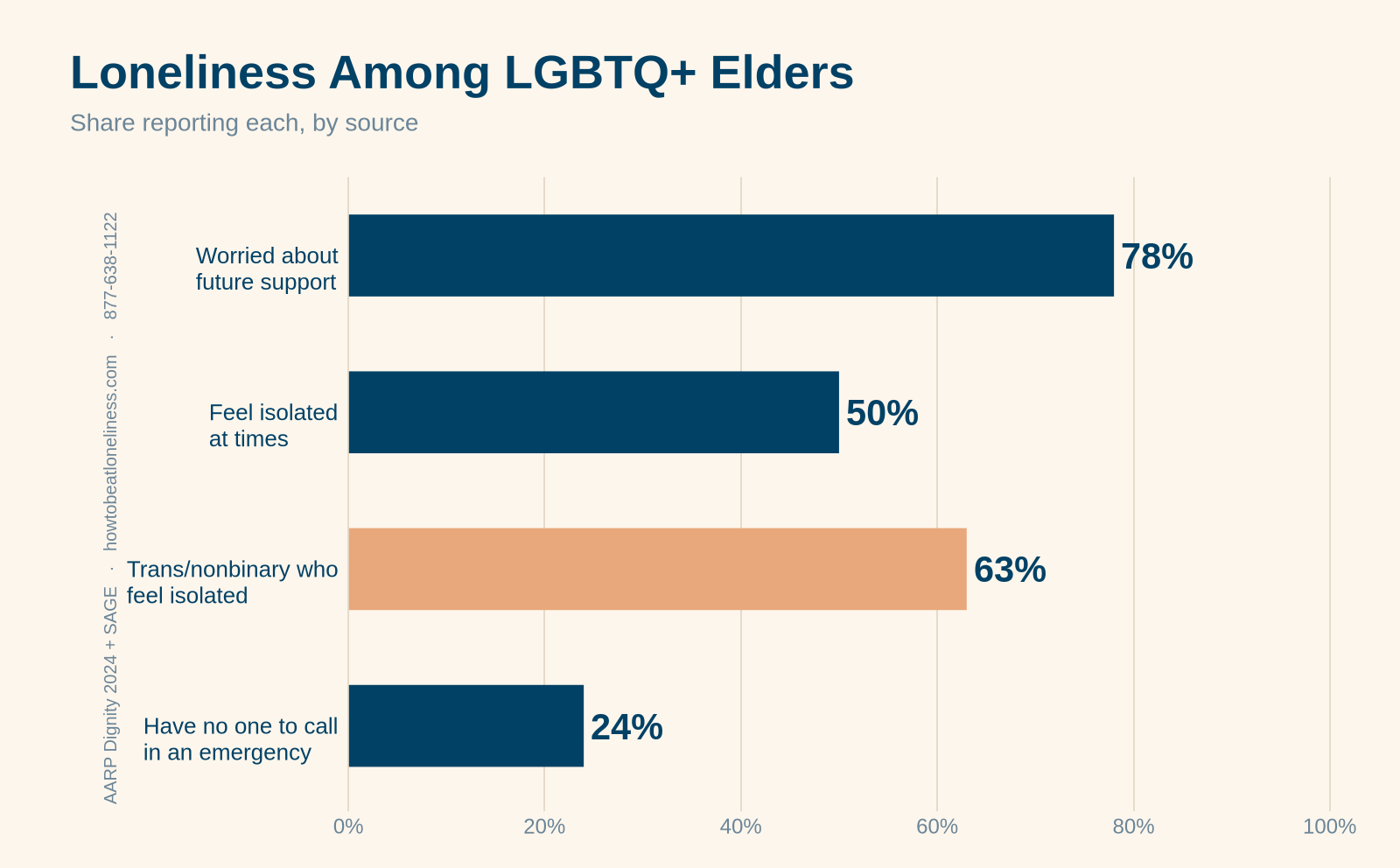
50% of LGBTQ+ adults 45 and older say they already feel socially isolated at times, and 78% are concerned about having enough social support as they age, according to AARP’s 2024 Dignity survey of more than 2,200 LGBTQ+ older adults. Women, Black respondents, and people with disabilities in the survey were more likely to say they were “extremely” or “very” concerned.
Twice as likely to live alone, half as likely to have a partner
LGBTQ older adults are twice as likely as their heterosexual peers to live alone, and half as likely to have a life partner or significant other, according to SAGE, the national LGBT elder advocacy organization. They’re also half as likely to have close relatives they can call on for help.
Four times less likely to have kids nearby — and almost a quarter have no one to call
SAGE’s figures go further: LGBTQ older adults are four times less likely than straight peers to have children who can help with care, and almost a quarter have no one at all to call in an emergency. AARP’s numbers show how that plays out by family type — only 35% of LGBTQ+ older adults have children or grandchildren, ranging from 17% of gay men up to 55% of lesbian women.
Transgender and nonbinary elders carry the heaviest load
Inside that same AARP survey, 63% of transgender and nonbinary older adults said they often or sometimes feel isolated from others, and 64% said they feel left out — both noticeably higher than other LGBTQ+ respondents. Gay men, by contrast, are less likely to have a partner but don’t report feeling more isolated than other groups — a reminder that these numbers describe patterns, not any one person’s experience.
What actually helps
AARP’s data found that LGBTQ+ older adults who live with a partner report less isolation than those who don’t. For people who are single, widowed, or estranged from family, the fix community groups point to is the same one that shows up everywhere in loneliness among LGBTQ elders research: build replacement ties on purpose, through a local LGBTQ+ senior center, a faith community that welcomes you as you are, or shared activities — see our list of hobbies for lonely adults for a starting point.
And for the almost one in four with no one to call — that’s exactly the gap a free phone line is built for. You don’t have to explain your whole history to the person who answers. For more on what that actually sounds like, see someone to talk to when you’re lonely, or just call.
— Jewel, How To Beat Loneliness