

The short version: if you want a number to call just to talk — no crisis, no reason required — here it is: How To Beat Loneliness answers free at 877-638-1122. A real, caring person picks up, it costs nothing, and “I just felt like talking” is a completely good reason to call. And if today feels unsafe, or you’re thinking about harming yourself, call or text 988 (the U.S. Suicide & Crisis Lifeline) right now.
I’m Jewel, and I’m one of the people who actually answers that line. I’ll keep this short, because if you’re looking for a number to call just to talk, you probably don’t want a lecture — you want a person. So here’s the number one more time — 877-638-1122 — and below are a few plain, true things about why this kind of line exists, who calls it, and why simply hearing a friendly voice does more than it sounds like it should.
The Number to Call Just to Talk — and Who Answers
The number is 877-638-1122. It’s toll-free in the U.S., and a real human — often me — picks up. There’s no menu, no “press 1,” no intake form, and no bill at the end. You can talk for three minutes or thirty. You don’t have to explain yourself, either: plenty of people open with “I don’t really know why I called,” and honestly, that’s a perfect place to start. We’re companions, not clinicians — we listen and keep you company. We don’t diagnose, we don’t prescribe, and we never sell you anything.
“Just to Talk” Is Reason Enough
Here’s the thing people get wrong most often: you don’t need a problem to deserve a conversation. A line you call simply because you’d like company has a name — clinicians call it a “warmline.” The American Psychiatric Association describes warmlines as support offered before a crisis develops, for exactly the ordinary, low-grade lonely most of us feel on a quiet evening. A Tuesday when the house is too silent absolutely counts. That’s the whole point of having a number to call just to talk.
And if reaching for the phone feels a little embarrassing, the science is reassuring. In a research review, the National Institutes of Health describes loneliness as an evolved signal — a bit like hunger or thirst — that nudges us back toward other people. Wanting to talk to someone isn’t a weakness or a flaw. It means your wiring is working exactly the way it’s meant to.
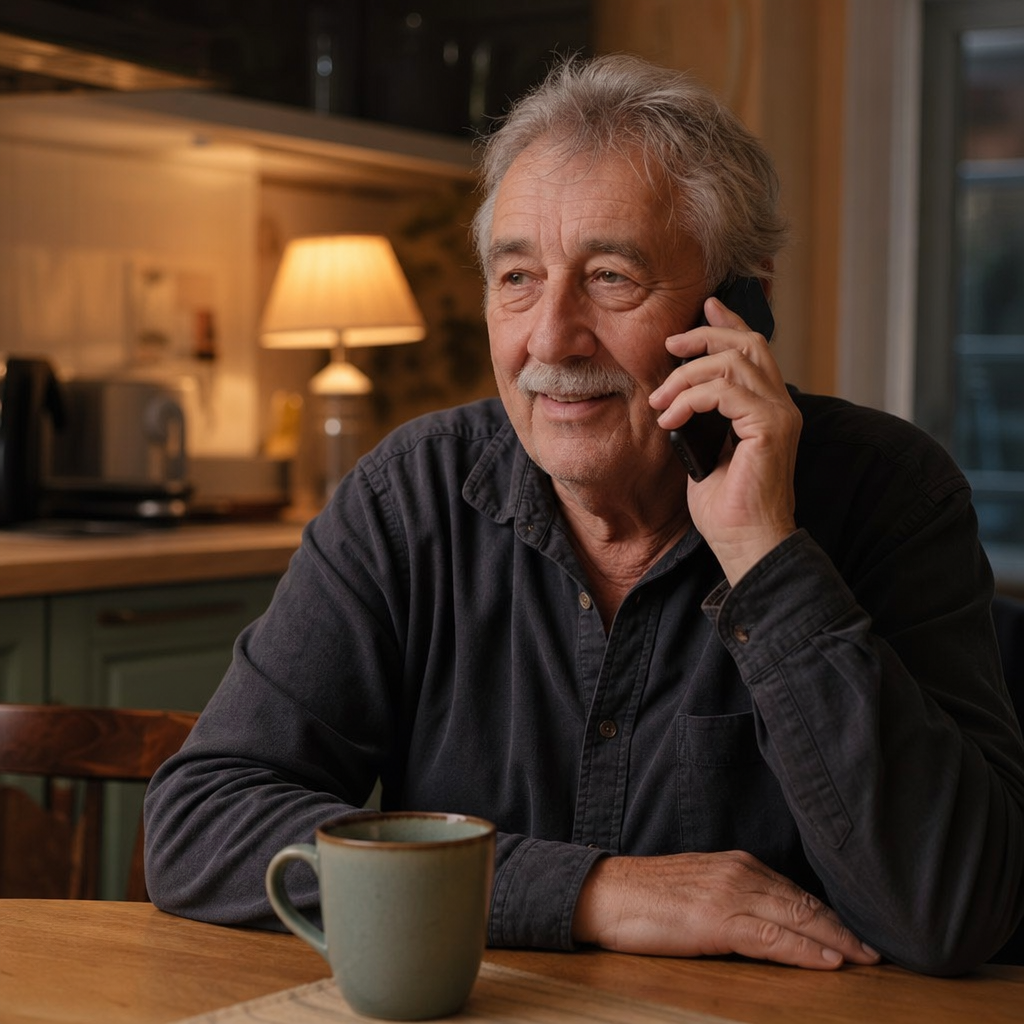
Why Hearing a Voice Helps More Than It Sounds Like It Should
Small contact does real work. The National Institute on Aging notes that even brief, regular contact with other people supports both mental and physical health — you don’t need a packed social calendar, just a little genuine connection. One phone call can be exactly that.
It matters more than a quick chat might seem to, because loneliness isn’t only a mood — it touches the body. The U.S. Surgeon General’s 2023 advisory found that prolonged disconnection carries health risks comparable to smoking up to 15 cigarettes a day, and that about half of U.S. adults report measurable loneliness. The hopeful flip side, from the same research, is that the effect eases when steady connection returns. One conversation won’t undo everything, but it’s a real first thread — and you can pull it any time, just by dialing.
You’re also in enormous company. In a June 2025 report, the World Health Organization found that roughly 1 in 6 people worldwide are affected by loneliness. Whatever you’re feeling right now, millions of people felt it this week too.
You Don’t Need a Crisis — or a Script
Let me say this as plainly as I can: a number to call just to talk is not a crisis hotline, and you’re allowed to use it for everyday, garden-variety lonely. You don’t have to be at the end of your rope, and you don’t have to have the right words ready. If you’d like to see other options too, our guide to free loneliness lines you can call lists several, and if you’re curious what a call actually feels like before you dial, here’s an honest look at what happens when you call a loneliness line.
What Actually Happens When You Call
You dial 877-638-1122. It rings. A real person says hello. That is the whole promise — if you want the longer version, here is what it’s like to talk to a real person on the phone. From there we just talk — about your day, the week you’ve had, the thing you’ve been carrying, or nothing in particular. The one thing I notice on almost every call: the hardest part is the first thirty seconds. After that, people talk, and most exhale and say, “I didn’t know what to expect.” If you want the bigger picture of why we built this, our founder wrote honestly about starting a free loneliness phone line, and our main guide walks through gentle next steps for how to beat loneliness, one small move at a time.
What Do You Say When You Call a Line Just to Talk?
Say anything — or say you don’t know why you called. On a companion line like How To Beat Loneliness (877-638-1122), there is no script and no expected opening; the person answering carries the conversation with you. Many callers start with the weather, their day, or a simple hello.
There’s no wrong opening. Companions are trained to pick up the thread from whatever you offer — a ballgame, a grandchild, the fact that the house has been too quiet since spring. And if silence happens, that’s fine too; the person on the other end will ask an easy question, and the conversation finds its feet from there.
Important
We are companions, not clinicians. The free line at How To Beat Loneliness is staffed by real people who listen — we don’t diagnose, prescribe, or treat. If your loneliness has slid into something heavier — you’ve stopped sleeping or eating well, or you feel hopeless more days than not — please pair a conversation with us with your doctor or a licensed therapist. And in a crisis, or if you’re thinking about harming yourself, call or text 988 (the U.S. Suicide & Crisis Lifeline) right away.
A Note From Jewel
If you’ve read this far and you’re still holding the phone, unsure whether to dial: you don’t need a reason, and you don’t need to know what to say. Just call, and let me say hello — you can always hang up if it feels wrong. Most people don’t. Wanting someone to talk to is the most human thing there is, and it’s exactly what this number is for. I’d be glad to hear from you: 877-638-1122.
— Jewel, How To Beat Loneliness
Frequently Asked Questions About a Number to Call Just to Talk
Is there a number I can call just to talk to someone?
Yes. How To Beat Loneliness runs a free number to call just to talk: 877-638-1122. A real, caring person answers, it’s toll-free in the U.S., and wanting to talk is reason enough — you don’t need to be in crisis.
Is it free to call?
Yes, completely. The line is free, with no sign-up and no upsell. Longer paid companion sessions exist only to help fund the free line, and free-line callers are never pitched.
Do I have to be in a crisis to call?
No. It’s a warmline for ordinary, everyday loneliness — not an emergency hotline. Call 877-638-1122 just because the house feels too quiet. If you ever feel unsafe or are thinking about harming yourself, call or text 988 instead.
Who answers when I call?
A real, trained human — not a bot, and often me (Jewel). We’re companions, not clinicians: we listen and keep you company. We don’t diagnose, prescribe, or sell anything.
Not sure a phone call is the right first step? Start with our guide to finding someone to talk to when lonely.
Sources
- American Psychiatric Association — Warm Lines: Providing Help Before a Crisis Develops
- National Institute on Aging — Loneliness and Social Isolation: Tips for Staying Connected
- U.S. Surgeon General (2023) — Our Epidemic of Loneliness and Isolation
- World Health Organization (2025) — Social connection linked to improved health and reduced risk of early death
- National Institutes of Health — Evolutionary Mechanisms for Loneliness