
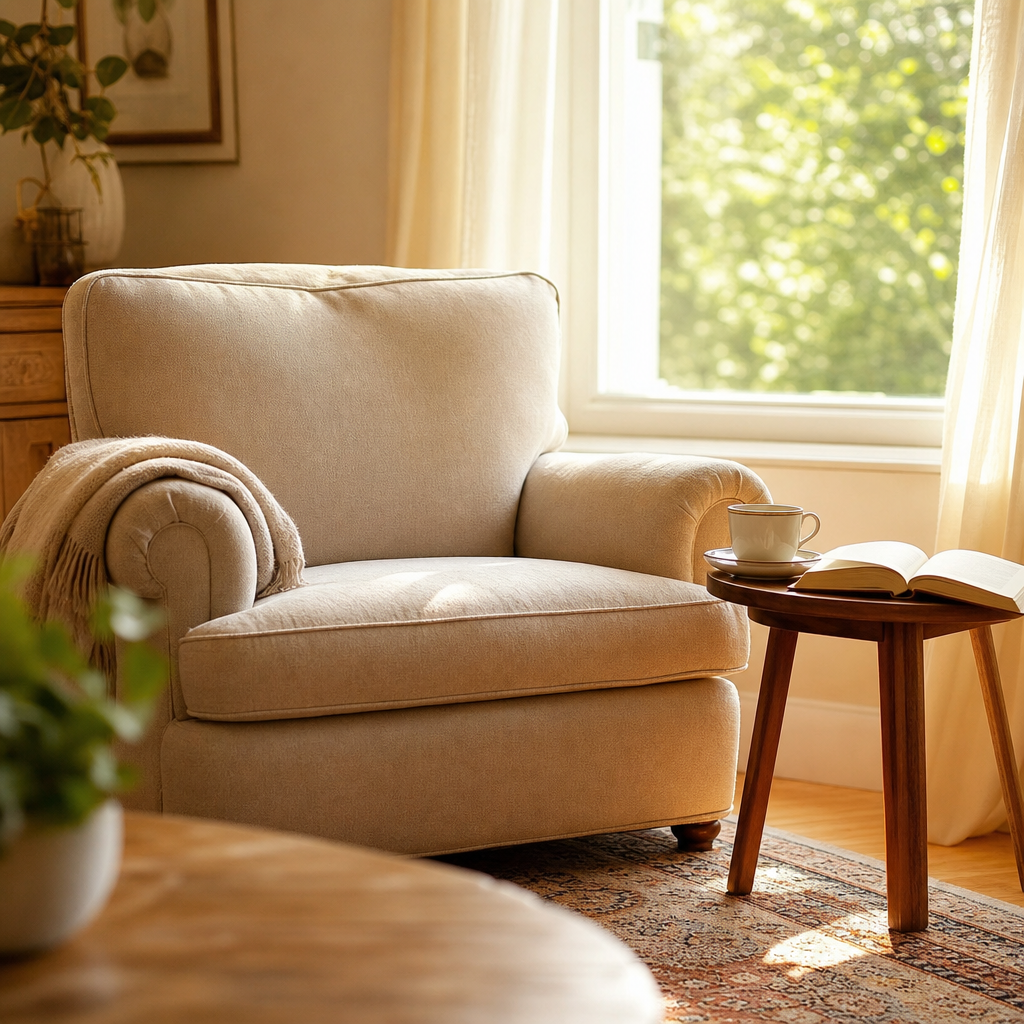
The short version: How to live alone without being lonely starts with a fact most people miss — living alone and feeling lonely are two different things. A record number of us live solo, and many of us are fine. The ache shows up when the days lose their shape and the phone stops ringing. This is what helps, in plain language. And if the quiet ever turns into something heavier, call or text 988 any time.
I’m Sergio. I started How To Beat Loneliness, and I’ve spent a lot of years living in different cities, sometimes with a full house and sometimes with a very quiet one. So when people ask me how to live alone without being lonely, I don’t give them a lecture. I tell them what I’ve watched work for real people — and I remind them there’s a real human on the other end of 877-638-1122, free, whenever the room gets too quiet.
How to live alone without being lonely starts with one fact
Living alone is at an all-time high. In 2025 there were 39.7 million one-person households in the U.S. — about 29% of all homes, up from 20% in 1975. Among adults 65 and older, roughly one in four lives alone. If you’re solo, you are in enormous company.
Here’s the part that matters. Researchers are careful to separate two ideas: living alone is an objective fact about your address, and loneliness is a subjective feeling about your relationships. One does not automatically cause the other. In studies of older adults, loneliness — not the living arrangement itself — was the stronger predictor of depression, and many people who live alone actually prefer it and function well.
So the goal isn’t to stop living alone. The goal is to keep solitude from sliding into isolation. That’s a smaller, more doable problem than it feels like at 9 p.m. on a Sunday.
Why a solo home tips into loneliness
The National Institute on Aging is blunt about the risk: about 1 in 4 adults 65 and older are socially isolated, and being alone leaves people more vulnerable to loneliness, which is linked to heart disease, depression, and cognitive decline. The U.S. Surgeon General put the health toll of chronic loneliness on par with smoking.
But notice when it happens. Living alone gets lonely when structure disappears — after a job ends, after a spouse is gone, after the kids move out. Nobody is expecting you at a certain time. No one notices if you skip a meal or don’t speak out loud all day. The silence isn’t the enemy. The lack of rhythm is.
That’s good news, because rhythm is something you can rebuild on purpose.

What actually helps when you live alone
None of this is complicated. Knowing how to live alone without being lonely is less about big life changes and more about a handful of small habits that put shape back into the week.
1. Put one fixed connection on the calendar
The NIA’s first tip is to schedule regular phone or video calls — daily, weekly, whatever you’ll keep. One standing call you can count on does more for loneliness than ten that might happen. Pick a person and a time, and protect it.
2. Build anchors into your day
A morning walk. The same coffee shop. A library hour. When you live alone, the day has no built-in checkpoints, so you give it some. Anchors are how you turn an empty day into a day with a spine.
3. Pick something that needs you back
A class, a volunteer shift, a community garden, a pet. The trick is choosing something where your absence is noticed — a place that expects you. That small accountability is what pulls people out the door on the days they’d rather not move. If your circle has thinned out, it’s never too late to make new friends.
4. Make the house feel inhabited
Light on in the kitchen. Music or a podcast voice in the background. A meal at the table instead of standing at the counter. These sound small, but they tell your nervous system the home is alive, not abandoned.
5. Have a number for the hard hours
Some evenings, none of the above is enough and you just want to hear a voice — the nighttime hours can be the hardest. That’s exactly why our free line exists. You don’t need a reason or a crisis — you can call 877-638-1122 and talk to a real person. We are companions, not clinicians, and sometimes a companion is the whole answer.
A founder’s note on the quiet days
I’ve had seasons where the house was loud with family and seasons where it was just me and a kettle. The quiet ones taught me that living alone can be peaceful or it can be heavy, and the difference usually comes down to whether anyone is woven into your week on purpose.
You don’t have to fix your whole social life this month. Add one standing call. Keep one anchor. Find one place that expects you. That’s the entire playbook for how to live alone without being lonely — small, repeatable, and within reach starting today.
One more thing: if living alone has started to feel like more than loneliness — if you’re sinking, not just quiet — please reach out for real support. Call or text 988 (the U.S. Suicide & Crisis Lifeline) any time, day or night. Our line is here for the lonely hours, but 988 is there for the dark ones.
Frequently asked questions about living alone without being lonely
Is living alone the same as being lonely?
No. Living alone is a circumstance; loneliness is a feeling. Many people who live alone are content, and research finds loneliness predicts low mood more reliably than living arrangement does.
How can I live alone without feeling lonely?
Build rhythm and contact into the week — a standing call, a class, a volunteer slot, a daily walk where you greet people — and make your home feel chosen rather than empty.
Why does living alone feel lonelier at certain times?
Evenings, weekends, and the stretch after a loss or a move are common spikes, when the quiet is loudest. Planning a little contact around those windows helps.
Who can I call if I live alone and feel lonely?
How To Beat Loneliness is a free line answered by a real person, any day: 877-638-1122.
Related reading: living alone and lonely — 7 honest facts
Sources
- U.S. Census Bureau — Families and Living Arrangements, 2025 (one-person households)
- Pew Research Center — Older U.S. adults living alone, Dec 2025
- National Institute on Aging — Loneliness and Social Isolation: Tips for Staying Connected
- CLHLS study — Living arrangement, loneliness, and health outcomes in older adults (PMC)
- U.S. Surgeon General — Our Epidemic of Loneliness and Isolation (2023 Advisory)