
Short version: a virtual companion for elderly parents usually means one of three things — a scheduled phone call from a real person, an AI companion device that talks back on its own, or a video call with family. They don’t have the same evidence behind them. If you want a real human conversation today, call 877-638-1122 — free, no script, no upsell.
I’m Landon. I’m part of the team at How To Beat Loneliness, the free phone line where a real person picks up any day, just to talk. A lot of families ask us the same question once they start looking: should Mom or Dad get a phone companion service, an AI companion device, or just more video calls? I wanted an honest answer, not a sales pitch, so I pulled the actual research on each one.
What counts as a virtual companion for elderly parents
A virtual companion for elderly adults usually falls into one of three categories, and they are not interchangeable: a phone companion call from a real, trained person; an AI companion device or app that holds a conversation on its own; or a video call with family, a volunteer, or a visitor. Each one has a different track record, so “does it work” depends on which one you mean.
Phone companion calls: the plain, human option
A phone companion call is exactly what it sounds like — a real person calls on a set schedule and the two of you talk. How To Beat Loneliness runs a free version of this at 877-638-1122, and the federal Senior Companion Program runs a free, volunteer-based version for income-eligible older adults.
The strongest research on phone calls isn’t just warm and fuzzy — it’s measured. A 2026 randomized trial published in JAMA Network Open, called HEAL-HOA, put 1,151 socially isolated older adults in Hong Kong through eight 30-minute phone sessions over four weeks, delivered by trained lay callers. Plain befriending calls — just talking, no set structure — were the comparison group. At 12 months, two more structured phone programs, one built around behavioral activation and one around mindfulness, reduced loneliness significantly more than plain befriending did.
That isn’t a knock on befriending calls. It means a friendly voice on the phone helps, and a phone call built around a bit of structure helps more. Either way, a real person has to be the one making it.
AI companion devices and apps: strong early numbers, thin verification
ElliQ, the AI companion device deployed through New York State’s Office for the Aging, is the most tested product in this category. In a pilot of more than 800 New Yorkers, the agency reported that 95% of users said they felt less lonely, with users interacting over 30 times a day and more than three-quarters of those interactions tied to social, physical, or mental well-being.
That’s a striking number, and it’s worth taking seriously. It’s also self-reported pilot data from the program running it — not an independent, peer-reviewed study. We looked at this in more depth in our piece on whether an AI companion can make loneliness worse, and the honest read holds up here too: the device seems to help people feel engaged in the moment. Whether that holds up against the structured phone-call research above is still an open question — read more in our full look at AI companions for seniors.
Video calls: the evidence is weaker than you’d expect
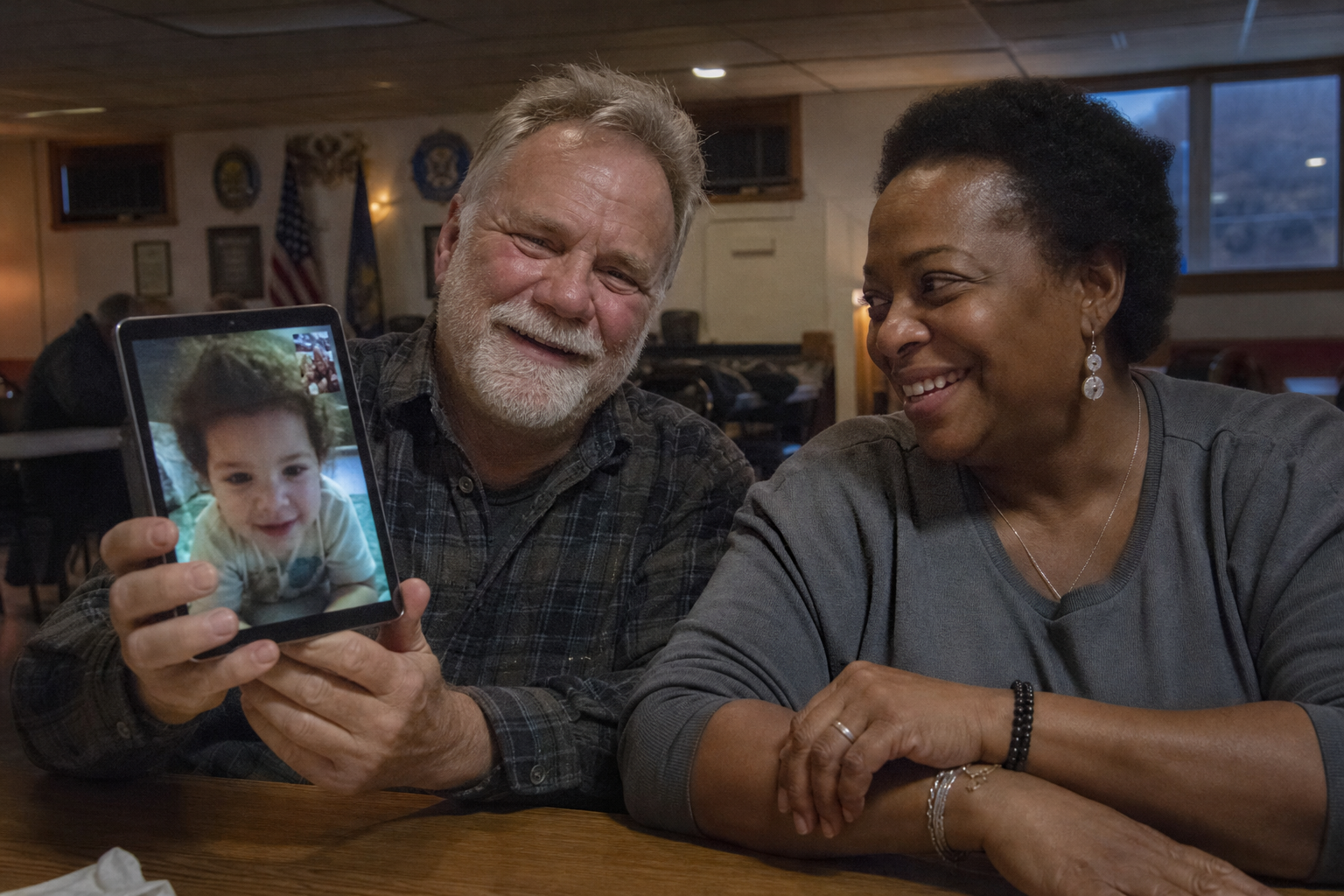
Video calls feel like the obvious upgrade over a phone call, since you can see a face. The research doesn’t back that up, at least not yet. A Cochrane rapid review looked at three trials of video calls for older adults in nursing homes and found the evidence “very uncertain.” On the standard loneliness scale, the difference between video calls and usual care was close to zero at both three and six months.
That doesn’t mean video calls are useless — it means nobody has proven, in a rigorous trial, that video calls alone reduce loneliness more than not having them. A video call from a grandchild is still worth having. It’s just not the proven intervention it’s often assumed to be.
The honest comparison
| Option | Cost | Evidence quality | Where it falls short |
|---|---|---|---|
| Phone companion call (How To Beat Loneliness, Senior Companion Program) | Free | Strongest — 1,151-person RCT (JAMA Network Open, 2026) showed measurable loneliness reduction | Just a voice, not a face; structured programs outperform plain chatting |
| AI companion device (e.g. ElliQ) | ~$60/mo + enrollment fee; free via some state aging agencies | Promising but unverified — 95% self-reported in an uncontrolled pilot, not a peer-reviewed trial | No independent study yet; it’s a device, not a person |
| Video call (family, volunteer visitor) | Usually free | Weakest measured effect — Cochrane review found evidence “very uncertain” | Needs tech comfort and someone willing to call; not proven alone |
So which one actually helps
Based on what’s actually been measured: a real person on the phone, calling on a schedule, has the best evidence behind it right now — especially when the calls follow some structure. An AI companion device has very promising early numbers but still needs independent verification. Video calls are valuable for the relationship itself, but the research hasn’t shown they reduce loneliness on their own. None of these replace each other; most families end up using more than one.
Questions we hear
Is an AI companion device a replacement for a real friend or caregiver?
No. Even the most promising AI companion numbers come from pilot programs, not a substitute for a real relationship. The honest guidance from the research and from the people who run these services is the same: use a virtual companion alongside real human contact, not instead of it.
Are video calls worse than phone calls for loneliness?
Not worse — just less proven. The research on video calls specifically is “very uncertain,” mostly because few rigorous trials have tested it. Phone-based programs have more and stronger evidence behind them so far.
Is How To Beat Loneliness a clinical service?
No. We are companions, not clinicians. Our free line connects you with a real person to talk to — not a therapist, not a diagnosis, not treatment.
How much does an AI companion device like ElliQ cost?
Roughly $60 a month, often with an enrollment fee, though it’s offered free through several state aging agencies. Our own phone companion line is free, with no device required — call 877-638-1122.
— Landon, How To Beat Loneliness
Sources
- JAMA Network Open — Behavioral Activation and Mindfulness Interventions in Reducing Loneliness and Improving Well-Being in Older Adults: The HEAL-HOA Randomized Clinical Trial, 2026
- Cochrane — Video calls for reducing social isolation and loneliness in older people (rapid review)
- New York State Office for the Aging — NYSOFA’s Rollout of AI Companion Robot ElliQ Shows 95% Reduction in Loneliness