Short version: if you have been wondering how to check on an elderly neighbor, you do not need permission and you do not need a reason — knock with something small in your hands, stay ninety seconds, and leave a number they can call on the days nobody comes by. Ours is free and answered by a real person: 877-638-1122. If they ever tell you they do not want to be here anymore, that is 988 — call or text, any hour.
I’m Sergio. I run How To Beat Loneliness — a free phone line for people who just need to talk. The question in this post is one I get from people who are not family, not clergy, not anyone’s caregiver: they just live next door to someone older who seems to be alone all the time, and they don’t know if knocking would be kind or nosy.
So here is the honest version of how to check on an elderly neighbor, from someone whose whole job is the phone call that happens when nobody knocks. If you want to skip the article and just talk it through, the number again is 877-638-1122.
How to Check on an Elderly Neighbor: Start With a Reason to Be There
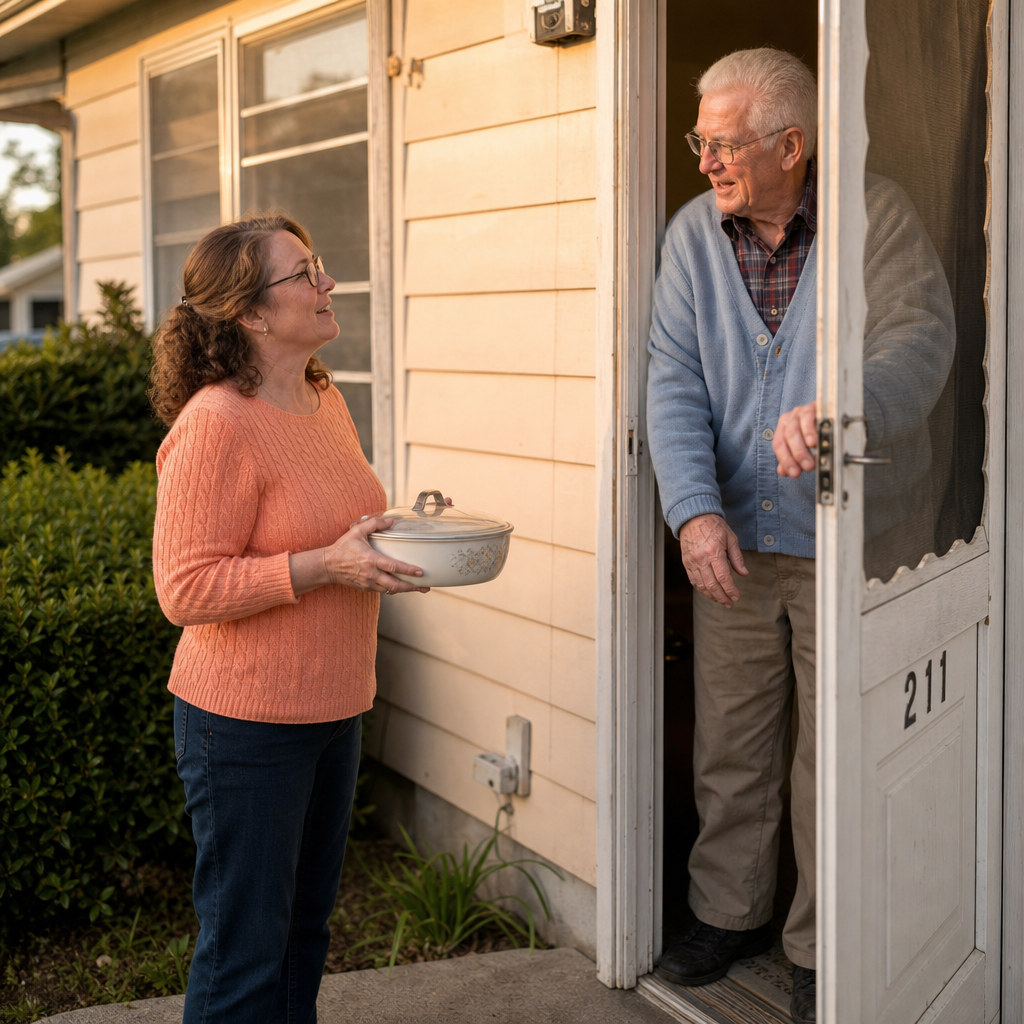
The easiest way to check on an older neighbor is to arrive holding something. A plate of food, their trash can wheeled back up the drive, a package that got delivered to your porch by mistake, a spare key you want them to have for your own house.
The object does the work. It gives you a reason to be on the step and it gives them a reason to open the door, and neither of you has to say the awkward sentence out loud — I think you might be lonely.
The National Institute on Aging’s own advice for staying connected in later life is not complicated: one of its listed suggestions is simply to introduce yourself to your neighbors. That’s the whole intervention. You are not being asked to become anybody’s social worker.
What You Can Actually See From the Sidewalk
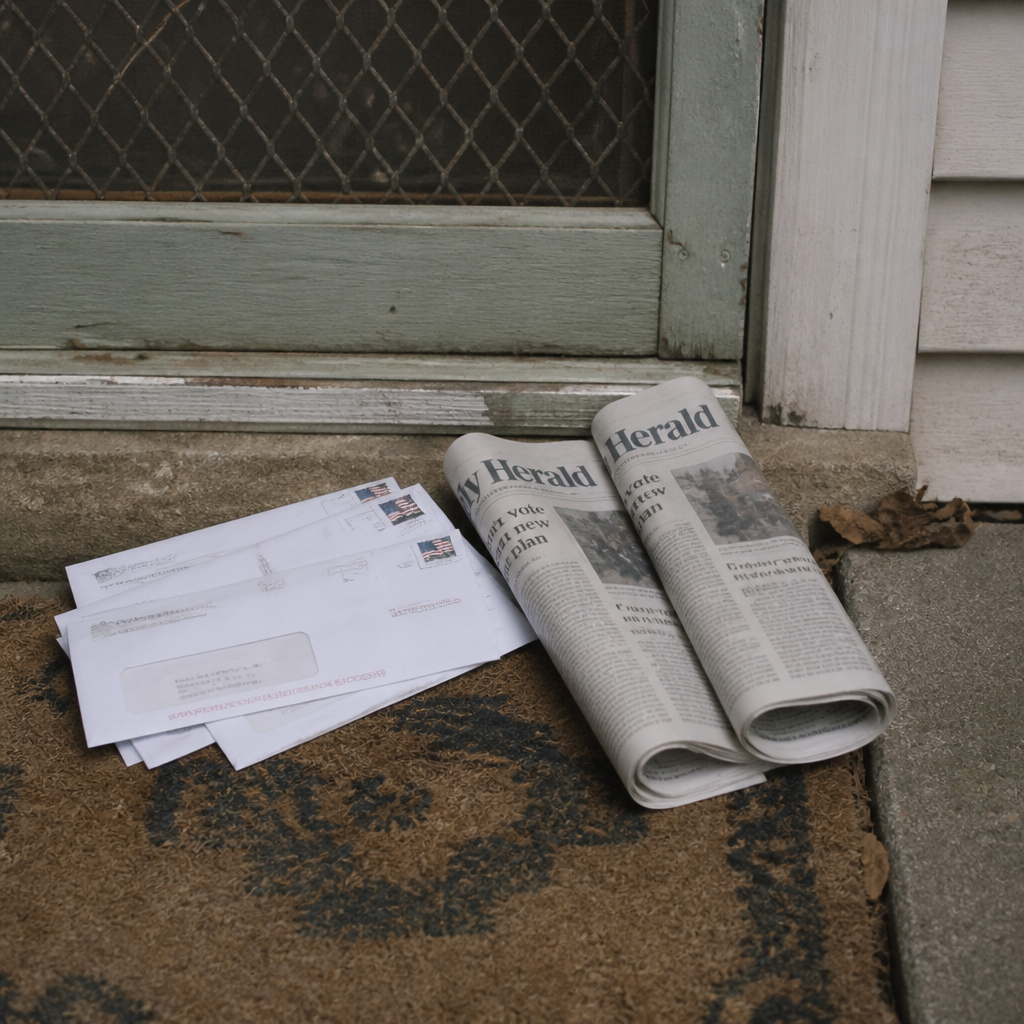
You can see more than you think without ever going up the walk. Mail and newspapers stacking up, curtains that haven’t moved in days, a car that hasn’t shifted position, bins that never go out, lights that never come on at night.
None of those on its own means anything. Two or three of them together for several days is worth a knock, and a knock costs you nothing but a minute of mild embarrassment.
The Knock: Ninety Seconds, Not an Afternoon
Keep the first visit short on purpose. Ninety seconds at the door, then leave — before they have to decide whether to invite you in and before you have to decide whether to stay.
A short visit is repeatable. An hour on the sofa is a favor, and people who feel like a favor stop answering the door. The whole goal of the first knock is that the second knock is easy.
Say your name even if you’re sure they know it. Say which house you’re from. Then hand over the thing and say the true sentence: I made too much, and I thought of you.
What to Say Once the Door Is Open
Ask about the house, the street, the weather, the dog — anything that is not their health. Health questions from a near-stranger land as an assessment, and nobody wants to be assessed on their own doorstep.
If you want one question that opens something, try: who do you usually talk to during the week? The answer tells you almost everything — whether there are children who call, whether there’s a church, whether the answer is nobody.
And if you hear something that worries you, you do not have to solve it standing there. You can say you’ll come back Thursday, and then come back Thursday. A little more on what to listen for is in our piece on the signs of loneliness.
Why the Small Stuff Counts More Than You Think
There is decent research behind the doorstep chat. In a 2014 study in Personality and Social Psychology Bulletin, Gillian Sandstrom and Elizabeth Dunn found that people reported more happiness and a stronger sense of belonging on days when they had more interactions with weak ties — acquaintances, neighbors, the person at the counter — not only with close friends and family.
There’s also a 2025 study in Innovation in Aging that followed 4,671 Australians aged 65 and over across four survey waves. What predicted loneliness was not how sociable the neighborhood objectively was — it was how each person perceived their own neighborhood, which is another way of saying that one neighbor who waves can change the street a person believes they live on.
Meanwhile the loneliness itself is not getting rarer. AARP’s Public Policy Institute surveyed 3,276 US adults aged 45 and over in August 2025 and found 40% reported being lonely, up from 35% in both 2010 and 2018.
When Something Feels Wrong
Most of the time nothing is wrong and you’ve just made a friend. Occasionally it is more than that, and it helps to know in advance which door you’re supposed to knock on next.
| What you’re seeing | What it probably needs | Who to contact |
|---|---|---|
| They seem alone most days, but fine | A standing reason to see you every week | You — plus our free line, 877-638-1122 |
| Mail piling up, no answer for days | A welfare check | Your local police non-emergency number, or a family member if you have one |
| Not eating well, no rides, no help at home | Local aging services | Eldercare Locator, 1-800-677-1116 |
| They say they don’t want to be here anymore | Immediate support, not a casserole | 988 Suicide & Crisis Lifeline — call or text |
The reason to know this in advance is that worry makes people freeze. If you already know the number to call, you call it instead of telling yourself it is probably none of your business.
What If They Don’t Want the Company?
Some people genuinely like their own company, and living alone is not the same thing as being lonely. If they’re brisk with you at the door, take it at face value and keep waving anyway.
Other people say no because saying yes feels like admitting something. Those people usually say yes on the third or fourth pass, which is the whole argument for short visits you can repeat without it becoming a production.
Either way, leave the number. A phone number sitting on a fridge asks nothing of anybody until the evening it’s needed — and that evening is often after a loss, sometimes one nobody else counted, like the death of a pet.
Questions People Ask
How often should I check on an elderly neighbor?
Once a week is plenty, and predictability matters more than frequency. A neighbor who knows you come by on Saturday mornings has something to look forward to on Friday night, which is most of the benefit.
Is it rude to knock if I barely know them?
No. Knocking with a plate in your hand and leaving inside two minutes is close to impossible to take badly. The only real risk is that they turn out to be chatty and you lose twenty minutes.
What if I’m worried but there’s no emergency?
That’s exactly what the Eldercare Locator at 1-800-677-1116 is for — it connects you to the aging services covering your neighbor’s address. If the worry is that they’re alone rather than unsafe, give them our number and let them decide when to use it.
Should I tell their family?
If you have a number and something concrete to report, yes. If it’s a feeling rather than a fact, tell the neighbor first — going over someone’s head is how a helpful neighbor becomes the one who is never let in again.
What do I do if they say they have nobody to talk to?
Give them 877-638-1122 and say a person picks up, it costs nothing, and they don’t need a crisis to call. You can also point them to our guide on finding someone to talk to when lonely.
Important
We are companions, not clinicians. The phone line at How To Beat Loneliness is staffed by real humans who listen — we don’t diagnose, prescribe, or treat, and nothing here is medical advice about your neighbor.
Prolonged isolation in later life is linked to real harm: the National Institute on Aging notes that isolated older adults have longer hospital stays, are readmitted more often, and are more likely to die earlier, and the 2023 US Surgeon General’s advisory put the mortality risk on a par with smoking up to 15 cigarettes a day. If your neighbor is in immediate danger or talking about hurting themselves, call or text 988.
One more thing, because people ask me whether any of this is worth the awkwardness. In four years of running this line I have never once heard someone say a neighbor checked on them too often.
— Sergio, How To Beat Loneliness
Sources
- National Institute on Aging — Loneliness and Social Isolation: Tips for Staying Connected
- AARP Public Policy Institute — Disconnected: The Escalating Challenge of Loneliness Among Adults 45-Plus, 2025
- Innovation in Aging — Neighborhood Characteristics and Loneliness in Later Life: The Role of Person-Environment Fit, 2025
- Sandstrom & Dunn — Social Interactions and Well-Being: The Surprising Power of Weak Ties, Personality and Social Psychology Bulletin, 2014
- Eldercare Locator — US Administration for Community Living, 1-800-677-1116