
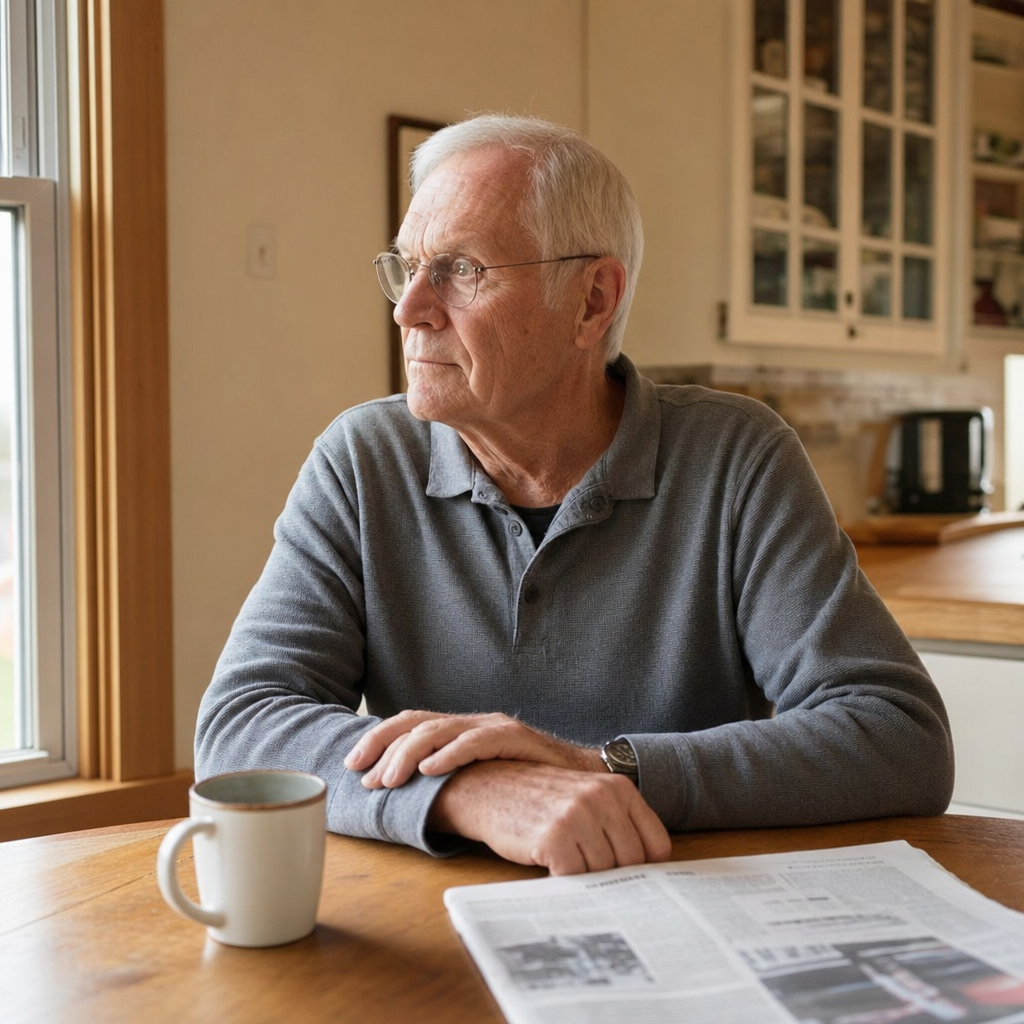
Short version: Loneliness in retirement is one of the most common things I hear about when people call our free phone line — and it almost never sounds the way the brochures describe it. It’s not “social isolation.” It’s the Tuesday morning that used to have a meeting in it, and now doesn’t. If that’s where you are, you can call us at 877-638-1122 any day. A real human picks up. There’s no fee and no catch.
I’m Sergio. I founded How To Beat Loneliness because I kept noticing the same thing in my own family and in the people I worked with through years of charity and education work — once the calendar empties out, a lot of good people quietly fall through. They’re not sick. They’re not broken. They’ve just lost the structure that used to put other humans in front of them every day. The first thing I want to say in a piece about loneliness in retirement is: this isn’t a character flaw. It’s a logistics problem with an emotional cost, and there’s a way through it.
Why retirement is its own kind of lonely
The research backs up what callers tell me. The U.S. Surgeon General’s 2023 advisory called loneliness a public health crisis and said the health impact of sustained social disconnection is roughly equivalent to smoking 15 cigarettes a day. The National Institute on Aging notes that retirement is one of the life events that most reliably tips people into unexpected isolation, alongside losing a spouse, losing a license to drive, or losing easy mobility. If you want the plain numbers behind that, we gathered what the research says about social isolation in older adults.
And the numbers from AARP’s 2025 research are striking in a way I didn’t expect. Forty percent of adults 45 and older say they’re lonely — up from 35% in 2018. But here’s the part most people miss: among working adults the rate is 40%, among non-working but not yet retired adults it’s 57%, and among actual retirees it’s 34%. Retirement, when it goes well, is actually the lower-loneliness category.
What that says to me, after thousands of conversations one degree of separation away from this issue, is that retirement itself isn’t the problem. The problem is the transition — the first six to eighteen months when the structure is gone and the replacement hasn’t shown up yet. That’s the gap our phone line was built for. If you’d rather have something on the calendar than dial when the day gets long, it’s worth reading about scheduled check-in calls for seniors before you decide.
What people actually describe on the call
When someone calls us about loneliness in retirement, the conversation almost never starts with the word “lonely.” It starts with a small concrete thing. A driveway that doesn’t get used. A coffee cup that only ever has one set of lips on it. The Sunday that used to mean church and now is just Sunday. Real conversations sound like this:
- “I retired in March. I thought I’d be fine. I’m not fine.”
- “My wife is still working. The house is so quiet I leave the TV on for company.”
- “I had a hundred people who counted on me at the office. Now nobody calls.”
- “My kids check in once a week. They love me. It’s not enough.”
None of these people are in crisis. They’re just experiencing what a lot of researchers have started calling the identity gap of retirement — the months after the job title goes away and before a new sense of who-you-are-now arrives. That gap is real, it’s normal, and it does pass. But it passes faster when there’s a human voice in it.

The things people try first — and why they often don’t stick
Almost everyone I talk to has already tried something before they pick up the phone. Most of these are good ideas. They just don’t always work alone.
1. A hobby
Woodworking, gardening, fishing, painting. A hobby is wonderful for the first week. The trouble is that hobbies are usually solo, and the version of loneliness in retirement that bites hardest is the absence of other people in the room. A workshop is a great place to spend an afternoon. It’s a quiet place to spend a year. The fix is to pair the hobby with a group that does it — a woodworking club, a community garden, a fishing buddy who calls on Saturdays. See our piece on hobbies for lonely adults for the angle on which hobbies do this best.
2. A part-time job or volunteer gig
This one works, especially for people whose old identity was tied tightly to their work. Tutoring, mentoring, volunteer driving, a couple of shifts at a hardware store, a board seat at a local nonprofit — these give back the structure and the people at the same time. The caveat: it has to be the right level of commitment. A full-time-equivalent volunteer role is often just a job without the paycheck, which doesn’t fix anything.
3. Travel
Travel is what people say they’re going to do in retirement and what a smaller number actually do at the cadence they hoped for. It also fades. The first cruise is wonderful. The second is fun. By the fifth, you’re back home for nine months a year and the kitchen is still quiet.
4. More time with the kids and grandkids
This is the one I treat with the most care. Adult children love their parents. They also have jobs, partners, and small humans who need them. The math of “we’ll see them more now” runs into the reality that they have less time than you do, not more. The trap is when this becomes the whole plan. Then every unreturned call lands harder than it should.
What actually helps — three things worth more than the rest
After two years of building this service, here is the short list I’d give a friend on their first month of retirement.
Build at least one weekly ritual with the same humans. Not a hobby you do alone, not a class you took once. A standing Tuesday breakfast. A Wednesday walk with the same neighbor. A Thursday-evening pickleball doubles. The repetition matters more than the activity. The NIA’s own guidance emphasizes this exact point — recurring contact, not one-off events.
Take the call when the phone rings — and pick up the phone when it doesn’t. Most lonely people in retirement are still waiting for someone else to make the first move. The relief of loneliness in retirement, in my experience, comes much more often from the person who got tired of waiting and dialed first. That can be an old colleague. An old friend you fell out of touch with by accident. Or, if there’s no obvious person, it can be us.
Have a real human to talk to about the small stuff. Not therapy — therapy has a different job. Not your spouse for everything — that’s a heavier load than it sounds. A second person who knows your dog’s name and remembers that your daughter was visiting last week. Sometimes that person is in your life already and you’ve been undervaluing them. Sometimes you need to build the relationship from scratch.
Where we fit in
How To Beat Loneliness is a free phone line. The person who picks up — most likely Jewel right now, more people as we hire — is a real, trained, paid human. Not a chatbot. Not an AI. Not a volunteer reading off a script. We don’t diagnose, we don’t prescribe, and we don’t try to sell you anything during the call. We’re companions, not clinicians.
For someone in the transition months of retirement, the line is meant to be exactly the kind of light, recurring contact the research keeps pointing to. You can call once. You can call every Tuesday morning. The number is the same either way.
A note from the founder
If you’re in the part of retirement nobody warned you about — the quiet Tuesday, the unused driveway, the kitchen that used to have two coffee cups in it — I want you to know two things. First, this is incredibly common, and it does not mean anything bad about you. Second, the way out almost always involves one regular conversation with one real person. If you don’t have that person yet, that’s what our number is for.
— Sergio, How To Beat Loneliness
Frequently asked questions about loneliness in retirement
Why is retirement so lonely for some people?
Retirement removes a built-in social world and a daily sense of purpose all at once. The hardest part is often the transition itself, not the years that follow.
How long does loneliness in retirement last?
For most people it eases as new routines and roles form over the first year or two. Building structure early tends to shorten it — a standing morning kickstart call is one way to anchor the day, and a legacy project gives the year a purpose.
How do I cope with loneliness after retiring?
Replace the work structure deliberately — a weekly schedule, volunteering, classes, regular meetups — and invest in friendships that ran on autopilot while you worked.
Who can I talk to about loneliness in retirement?
How To Beat Loneliness is free and answered by a real person: 877-638-1122.
Related reading: who to call when you’re lonely
Sources
- U.S. Surgeon General — Our Epidemic of Loneliness and Isolation (2023 Advisory)
- AARP — New Research: Loneliness Is on the Rise, Affecting 4 in 10 Older Adults (December 2025)
- National Institute on Aging — Loneliness and Social Isolation: Tips for Staying Connected
- National Institute on Aging — Social Isolation and Loneliness in Older People Pose Health Risks