
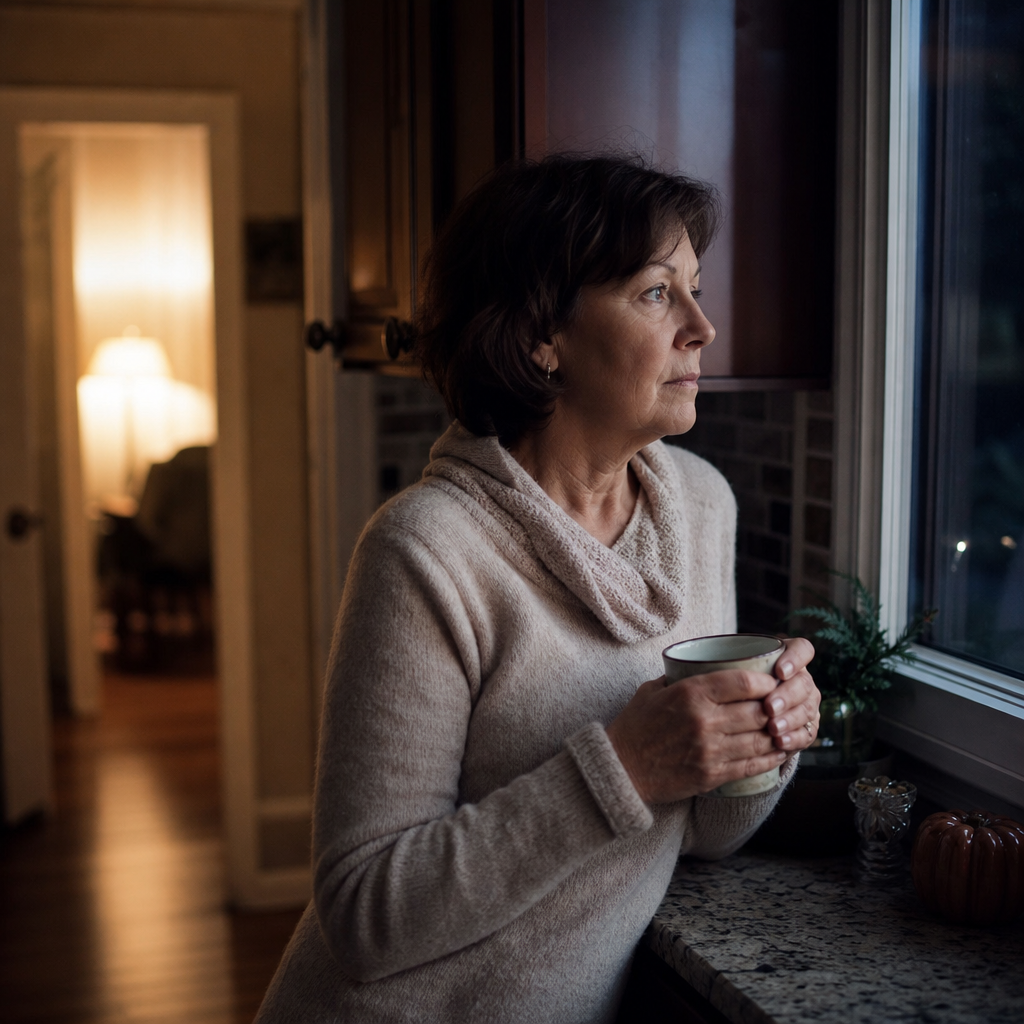
If you’re in crisis right now — call or text 988 (the U.S. Suicide & Crisis Lifeline), available 24/7. And if you searched for caregiver loneliness because you spend all day with someone and still feel completely alone — you’re not broken, and you’re in very large company. This article is for you.
I’m Landon. I help run How To Beat Loneliness, and I spent years before this training and managing teams — which taught me something that applies here more than anywhere: the people carrying the most are usually the last to say so. Caregiver loneliness is exactly that kind of carrying. You’re with another human being from morning to night, and somehow the loneliness is worse than if the house were empty. If that’s you, keep reading — and know there’s a free number with a real human on it whenever you need one: 877-638-1122.
Why caregiver loneliness happens — even when you’re never alone
Here’s the part nobody warns you about when you become a caregiver: company and connection are not the same thing. You can spend ten hours a day with your husband, your mother, your brother — and if the conversation has shrunk to medications, appointments, and “did you eat?”, the part of you that needs to be known is starving.
It gets harder when the person you’re caring for is the person you used to talk to. Spouses caring for spouses lose their best listener and gain a full-time job in the same year. Research from the Canadian Longitudinal Study on Aging found exactly this: caring for a spouse, and caring for someone with dementia, both significantly raise a caregiver’s risk of becoming socially isolated.
And the practical walls are real. Friends stop inviting you because you’ve said no six times. Leaving the house requires logistics most people never think about. The friendships that survived your forties and fifties quietly thin out right when you need them most. None of that is a character flaw. It’s the shape of the job. It also helps to know you don’t have to be the only voice in the house — companionship services for seniors, both free and paid, exist so the person you’re caring for has someone else to talk to as well.
The numbers: you are not the only one standing in that kitchen
Caregiver loneliness is one of the most documented and least talked-about experiences in American life right now. A few numbers worth sitting with:
- 63 million Americans — nearly 1 in 4 adults — provided ongoing care for an adult or a child with a serious condition in the past year, up 20 million since 2015, according to AARP’s 2025 Caregiving in the U.S. report.
- Nearly 1 in 4 caregivers report feeling socially isolated — and the same AARP report found women, and people who felt they had no choice in becoming a caregiver, are even more likely to feel alone in it.
- The National Survey of Caregiving put social isolation among family caregivers of older adults at roughly one in four as well — and isolated caregivers reported worse health than connected ones.
- About a third of caregivers of older adults say they feel lonely some days, most days, or every day, per an epidemiology study of family and unpaid caregivers.
- Loneliness isn’t just unpleasant — among spouses caring for a partner with dementia, a study from the English Longitudinal Study of Ageing found loneliness played a central role in the development of depressive symptoms.
The U.S. Surgeon General’s 2023 advisory called loneliness a public-health epidemic for the whole country. Caregivers are standing in the deep end of it — caregiver loneliness is the epidemic inside the epidemic. Loneliness also takes a measurable toll on your body — which matters double for you, because the person you care for needs you healthy.

What actually helps with caregiver loneliness
1. Say the quiet part out loud
Most caregivers I’ve talked to feel guilty even using the word “lonely” — as if naming it betrays the person they love. It doesn’t. You can love someone completely and still miss adult conversation, still miss being asked how you are. Saying “I’m lonely” out loud to one trusted person this week is the cheapest, fastest first move against caregiver loneliness on this page. And when the person you care for is quietly lonely too, a few gentle words for someone who’s lonely can reopen a conversation that has shrunk to medications and appointments.
2. Take respite without apologizing for it
Respite care — a few hours where someone else takes over — isn’t abandonment, it’s maintenance. Researchers reviewing what works for isolated caregivers consistently put respite near the top of the list, alongside support groups and friendly-visitor and call programs. Your local Area Agency on Aging can tell you what’s available where you live; in my experience the hardest step isn’t finding the help, it’s deciding you’re allowed to use it.
3. Find people who don’t need the backstory
Caregiver support groups work for a blunt reason: you skip the explaining. Everyone in the room already knows what 3 a.m. feels like. The same RTI review found group-based support reliably reduces caregiver loneliness — in person or online. If nights are your hardest hours, we wrote about coping with loneliness at night too.
4. Keep one appointment that’s only yours
One standing call with a friend. One coffee. One walk. Scheduled, recurring, small. In team management we called this “protecting the non-negotiable” — the calendar item that survives every busy week because it’s never up for debate. Caregiving will take every unguarded hour you have. Guard one.
5. Use a phone line built for exactly this
Some days you can’t leave the house, can’t make a group meeting, and don’t want to burden the same friend again. That’s the gap caregiver loneliness lives in — and the gap our free line exists to fill. A real, trained human answers — no script, no fee, no judgment, and you can call from the kitchen while the person you care for naps. If you’re wondering what it’s actually like, here’s exactly what happens when you call.
Important
We are companions, not clinicians. The phone line at How To Beat Loneliness is staffed by real humans who listen — we don’t diagnose, prescribe, or treat. Caregiver loneliness often travels with depression and burnout; if you’ve stopped sleeping, stopped eating well, or feel hopeless more days than not, please talk to your doctor or a licensed therapist alongside anything on this page. And in a crisis, call or text 988 right away.
A note from Landon
If you’re the one holding the pill organizer and the calendar and the whole quiet house — what you’re doing matters, and so do you. You don’t have to earn the right to one phone call about your own day. The number’s free. Use it.
— Landon, How To Beat Loneliness
Frequently asked questions about caregiver loneliness
Why are caregivers so lonely?
Caregiving can shrink your world to one person and one routine. You are rarely alone yet rarely seen, and there is little time or energy left for your own friendships.
Is caregiver loneliness common?
Yes. About 1 in 4 family caregivers report social isolation, and AARP counts some 63 million caregivers in the US, so this is a widely shared experience.
How can a caregiver cope with loneliness?
Protect small pockets of connection — a standing call, a respite hour, a peer group — and let other people help. You do not have to carry it alone.
Is there someone a caregiver can talk to?
Yes — How To Beat Loneliness is a free line answered by a real person, even late at night when the house is finally quiet: 877-638-1122.
Sources
- AARP (2025) — Caregiving in the U.S.: 63 million family caregivers
- Family Caregiver Social Isolation and Health — National Survey of Caregiving findings
- The Epidemiology of Social Isolation and Loneliness of Family and Unpaid Caregivers of Older Adults
- Social Isolation Among Spousal and Adult-Child Caregivers — Canadian Longitudinal Study on Aging
- The role of loneliness in the development of depressive symptoms among partnered dementia caregivers — English Longitudinal Study of Ageing
- RTI International — Addressing Social Isolation and Loneliness Among People Living with Dementia and Their Caregivers
- U.S. Surgeon General (2023) — Our Epidemic of Loneliness and Isolation