
Short version: Why it’s hard to say you’re lonely comes down to one number — most people who feel it never tell a single soul. If you’re sitting on that sentence right now, you don’t need the rest of this note. Just say it to us: 877-638-1122, free, any hour, no script.
I’m Landon. I answer calls on the free line at How To Beat Loneliness, and there’s a pause I hear almost every shift — the half-second before someone gets the actual sentence out. Not the small talk around it. The sentence itself. If you’re circling that sentence right now, you can skip the rest of this and just call: 877-638-1122.
Why It’s Hard To Say You’re Lonely
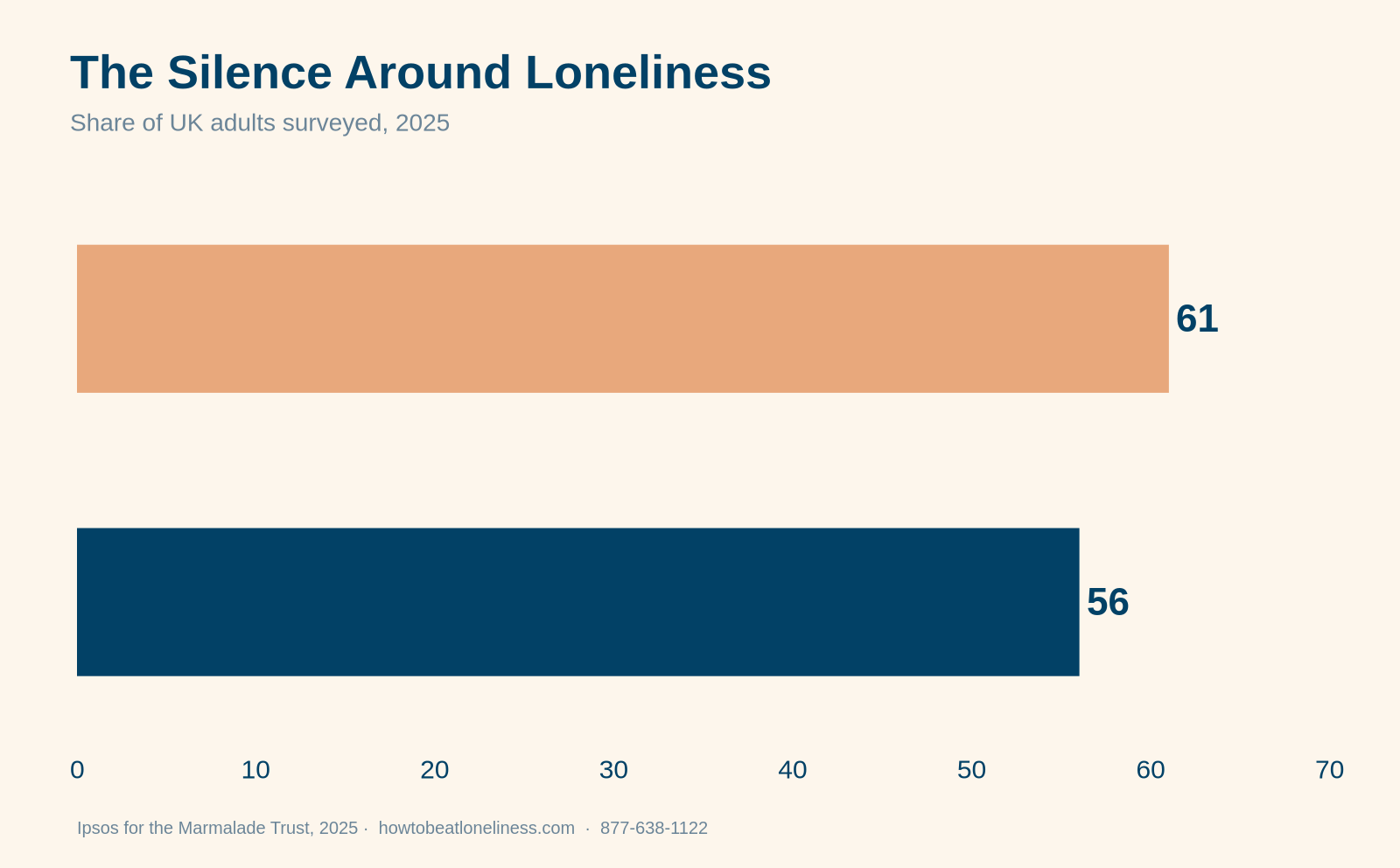
A 2025 survey by Ipsos for the Marmalade Trust asked 2,215 UK adults about loneliness, and 1,819 of them said they’d experienced it. Of that group, 61% had never told a single person they felt lonely — not a friend, not a doctor, not a partner. Across everyone surveyed, 56% pointed to feeling embarrassed, ashamed, or afraid of being judged as the reason they’d keep quiet about it. That’s not a small, private habit. That’s most people, sitting on the same sentence.
Men Carry an Extra Layer of This
AARP’s December 2025 loneliness survey found men are less likely than women to be in the rooms where this kind of thing comes up naturally: 32% of men attend religious services at least monthly versus 39% of women, 30% volunteer at least once a year versus 37% of women, and 19% belong to a local community group versus 24% of women. Fewer rooms means fewer chances for the sentence to slip out sideways, in conversation, instead of having to be announced. We wrote a longer guide on this for men specifically: clubs and groups for lonely men.
What I’ve Noticed Helps
People calling our line often open by half-apologizing for calling at all — for taking up a few minutes over something that “isn’t a real emergency.” By the end of the call, that apology is almost always gone. Nobody needs a reason to call. You don’t need to be in crisis, you don’t need a story ready, and you don’t need to have said the sentence out loud to anyone before. You can say it to us first. For more on what that actually sounds like, see our guide to finding someone to talk to when you’re lonely, or start from the beginning with how to beat loneliness.
This note reflects survey research and patterns I’ve noticed answering the phone — it isn’t a clinical opinion, and we are companions, not clinicians. If what you’re carrying feels like more than loneliness, including thoughts of harming yourself, please call or text 988 as well.
— Landon, How To Beat Loneliness